
What homeowners need to know — and how planners and finance specialists work together to set projects up for success
Renovating in Brisbane has surged again in 2025–2026, driven by rising property values, ageing Queenslander housing stock, and homeowners choosing to upgrade rather than move. But securing finance for a renovation today is very different from a decade ago. Banks have tightened assessment criteria, valuations are more conservative, and lenders now require clearer evidence that a renovation will genuinely increase property value.
For homeowners working with a planner, understanding how lenders assess your home — both as it stands now and after the renovation is completed — is essential. Early collaboration between your planning team and a renovation‑focused mortgage broker helps ensure your design vision aligns with what is financially achievable.
1. Key Figures Lenders Assess in 2026
 Before any bank will approve renovation finance, they assess several core numbers. These figures also help planners shape realistic design pathways:
● Current (“as‑is”) valuation
● Amount owing on your mortgage
● Available equity
● Design and drafting costs
● Construction quotes
● Projected “on‑completion” valuation
These numbers determine whether your renovation qualifies as a home improvement or a major renovation — which affects how much you can borrow and what documentation your planner and builder will need to provide.
2. Home Improvement vs Major Renovation (Why Banks Care)
Home Improvement Finance (Small to Medium Works)
Banks classify this as lower‑risk work such as:
● Kitchen or bathroom upgrades
● Flooring, painting, lighting
● Outdoor improvements
● Minor internal layout changes
In 2026, most lenders allow homeowners to access up to 150,000 in equity without 100,000–requiring detailed plans or builder contracts. This is typically done through:
● Loan top‑ups
● Equity release
● Simple refinance with cash‑out
No on‑completion valuation is required for this category, which means planners can move quickly on design concepts.
 Before After
Major Renovation Finance (Structural or High‑Value Works)
This includes:
● Extensions
● Raising and building under
● Major Queenslander restorations
● Second‑storey additions
● Full internal reconfigurations
Because these projects significantly alter the dwelling, banks require:
● Full design plans
● Engineering documentation
● Fixed‑price builder quotes
● Council or certifier approvals (or evidence they are underway)
● A formal on‑completion valuation
This is where collaboration between planners and finance specialists becomes essential — ensuring design intent, structural requirements, and lender expectations all align.
3. How Banks Calculate Your Available Equity (2026 Rules)
Your available equity is the foundation of renovation finance. Most lenders still cap borrowing at 80% LVR without LMI.
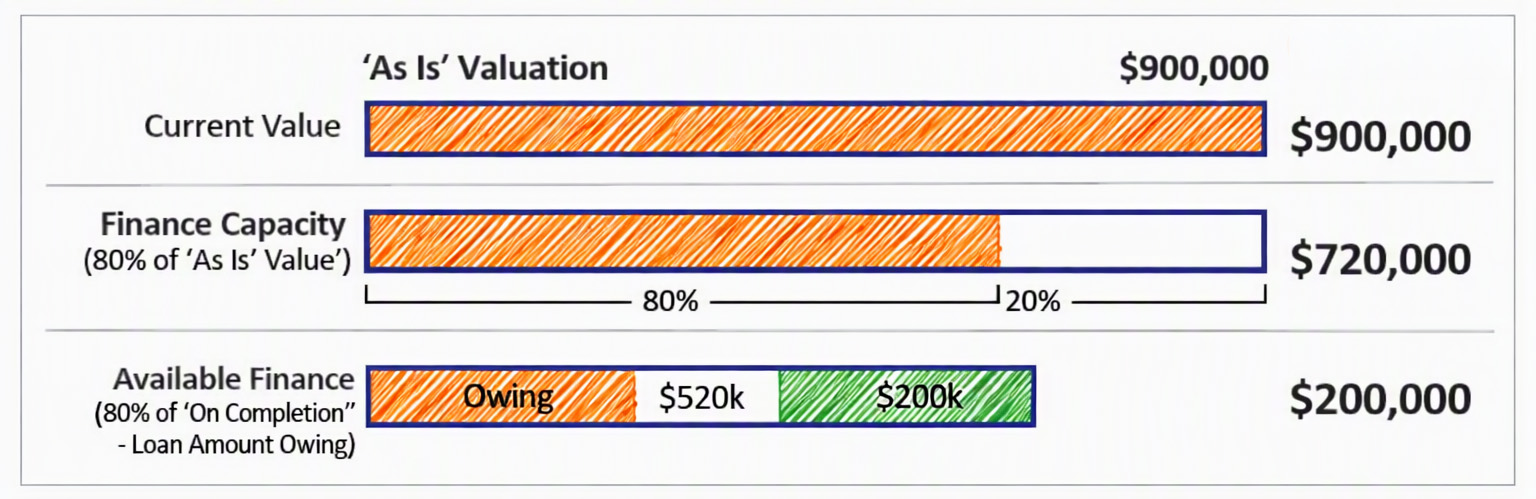
Example (2026 Brisbane Market)
● Current home value: $900,000
● Maximum lend at 80%: $720,000
● Current loan: $520,000
● Available equity: $200,000
This may be enough for home improvements — but major renovations often exceed available equity, requiring planners and brokers to work together on the next step: the on‑completion valuation.
4. On‑Completion Valuation (The 2026 Reality)
This valuation estimates what your home will be worth after the renovation is finished. It directly influences your total borrowing capacity and helps planners refine design scope.
What valuers assess today
● Land size and location
● Size, layout, and functionality of the proposed dwelling
● Street appeal and architectural cohesion
● Quality of finishes and materials
● Compliance with current building codes
Valuers in 2026 continue to be conservative, often choosing the lower end of the valuation range to reduce lender risk — making clear, well‑documented design work even more important.
Why 3D plans matter now
Modern 3D renders help valuers clearly understand:
● The new layout
● Improved functionality
● Street appeal
● Additional living space
Planners who provide strong visual documentation often help clients achieve better valuation outcomes.
5. Calculating Borrowing Capacity Using On‑Completion Valuation
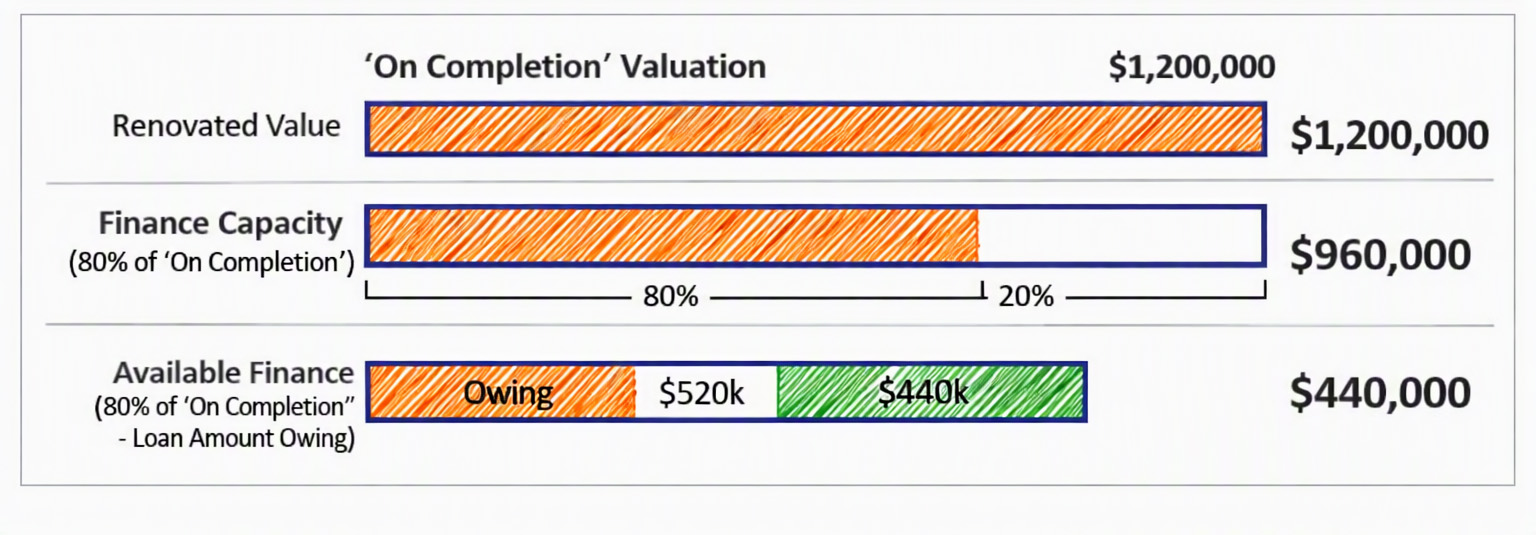
Using the earlier example:
If the on‑completion valuation is $1.2M:
● 80% lend = $960,000
● Less current loan = $520,000
● Available renovation finance = $440,000
This is how homeowners fund large‑scale renovations that exceed their current equity — and why planners benefit from early finance clarity before finalising design scope.
6. Current Lending Conditions (2026 Snapshot)
Brisbane homeowners should expect:
● More documentation required for major works
● Increased scrutiny of builder quotes
● Preference for fixed‑price contracts
● Longer approval timelines (2–6 weeks)
● Stricter assessment of borrowing capacity
● Higher emphasis on energy‑efficient upgrades
Planners who incorporate liveability improvements — additional bedrooms, bathrooms, open‑plan living — continue to see the strongest valuation uplift for clients.
How to get started…
7. Before You Apply: Complete a Feasibility Study
Before investing in design plans and construction quotes for your home renovation finance, you should consider an SEQ Building Design feasibility Study… Our report will detail the challenges, costs and deliver recommendations for both the regulatory and construction elements of your planned project.
On completion of the Feasibility study you will have all the information you need for a mortgage broker to make a detailed assessment on your probability of securing home renovation finance.
8. Working With a Renovation Finance Specialist
Renovation lending is more complex than standard refinancing. When planners and finance specialists collaborate early, clients benefit from:
● Clear borrowing capacity
● Guidance on lender requirements
● Support preparing documentation
● Coordination with designers and builders
● Stronger valuation outcomes
This partnership dramatically increases approval success rates for major renovations and ensures clients move through the design‑to‑construction journey with clarity and confidence.
While we have no financial interest, we are well aware of the quality of services provided by Melanie Smith – Mortgage Broker with Aussie Loans. Melanie is a home renovation finance specialist and has helped many Brisbane home owners finance their home renovations.
Melanie is contactable on 0411 223 301 or Melanie.Smith@aussie.com.au
About SEQ Building Design
SEQ Building Design – With over 20 years’ experience helping Queenslanders with their renovation designs and plans, we have a great understanding of what it takes to get your Brisbane renovation started so if you looking for designs or advice call our team on 07 3257 7224.
